
22 August 2022
Climate Change Actions and Biodiversity on Newford Farm
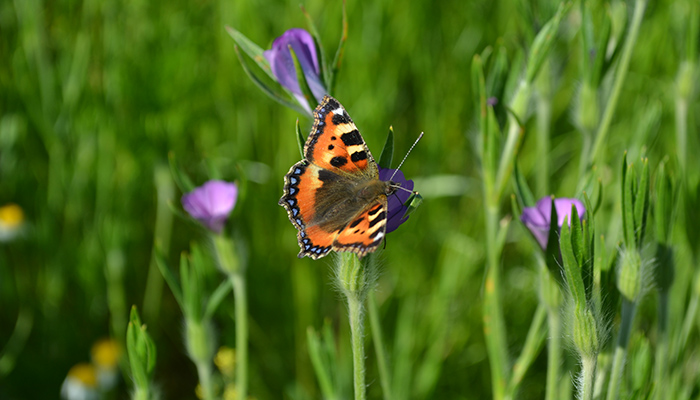
Along with most farms in the country the Newford farm is putting increasing emphasis on climate actions and biodiversity. Here Michael Fagan gives an update on some of the measures currently being implemented.
Newford Farm is working on enhancing the level of biodiversity on the farm. The farm has been selected as a demonstration farm as part of the Teagasc Signpost Programme. This will see a suite of measures introduced over the lifetime of the programme that will serve to:
- reduce the volume of gaseous emissions the farm produces
- protect water quality
- enhance biodiversity
- ultimately reduce cost and create more profitable and sustainable farming.
A number of these initiatives have already commenced.
Calving down heifers at 24 months
One of the practices commenced is calving down all the Newford heifers at 24 months of age, like this heifer a 1st calver and her heifer calf at foot pictured below
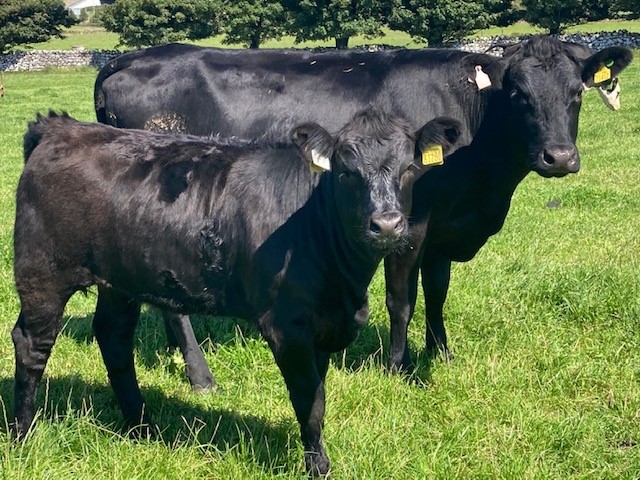
Aberdeen Angus x Friesian-cross cow born 21st February 2020 – 1st Calver, with her Limousin-cross heifer calf.
- Calved down: 30th January 2022
- Calf sire: Ewdenvale (LM 2014)
- Calf birth weight: 30 kg ( Female)
- Weight on 27th July: 249 kg
- Average daily gain from birth to weighing: 1.21 kg
- Dam’s weight on the 27th of July 2022: 484 Kgs
Not grazing some ground
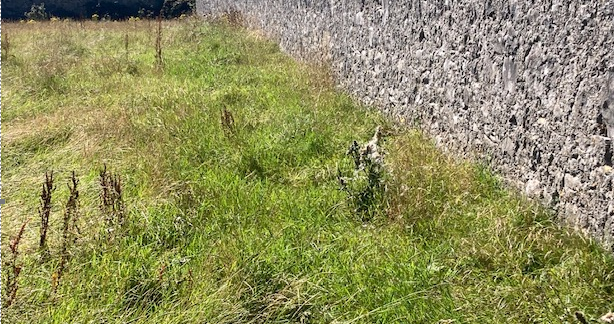
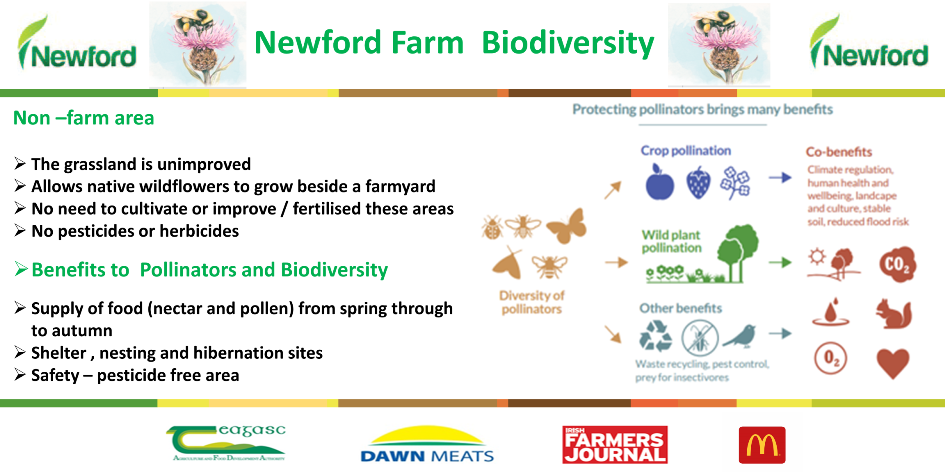
Newford set aside a small portion of old grazing ground beside the main yard, this ground has not be grazed over the summer months.
- This protected ground has many wild flowers in it and it has been a major source of food for the bees during the summer.
- This ground will be grazed in September and then it will be closed up again
You might also like to read Newford 17 ½ months old in-spec Beef Heifers finished off grass without meal
More information on the Newford Herd can be found here