
26 February 2025
Aidan and Luke Maguires’ approach to calf rearing
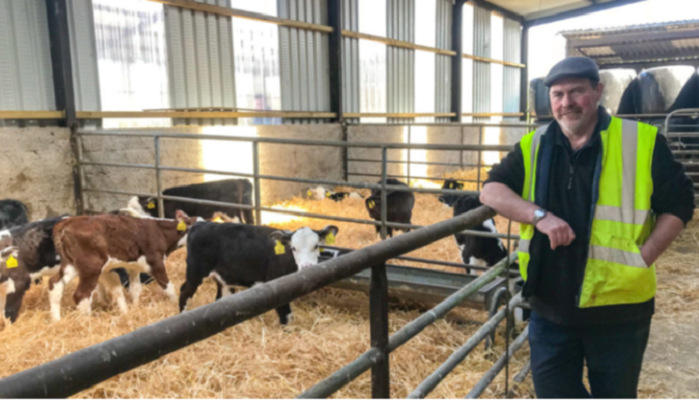
Between autumn 2024 and spring 2025, Aidan and Luke Maguire will rear over 160 calves. DairyBeef 500 Advisor to the farm, Fergal Maguire takes a close look at the calf rearing programme, which prioritises rumen development.
The primary goal of the calf rearing process on this farm is to support good weight gain, but the development of the rumen is what the Maguires place most emphasis on. This enables the calf to efficiently digest solid feed and transition smoothly from a liquid-based diet to a forage-based one.
Concentrates
As soon as a calf begins consuming meal or forage, beneficial microbes start proliferating in the rumen. These microbes are essential for breaking down solid feed and initiating the fermentation process. To function effectively, the rumen must not only increase in size but also develop papillae – small, finger-like projections that enhance nutrient absorption.
When calves arrive on the Maguires’ farm, they are offered a highly palatable starter crunch ad-lib. Each morning the meal troughs are cleaned out and new crunch is topped up. This concentrate should contain an energy value of at least 12 MJ/kg (greater than 0.95 UFV/kg) and 17–18% crude protein.
Fibre
In addition to concentrates, fibre plays an essential role in rumen development. Including fibre sources such as good quality straw helps build the rumen’s muscular layer and maintain a healthy lining. High fatty acid content in meals can cause papillae to grow excessively long and clumped, but fibre helps balance this growth.
On the Maguires’ farm, the calves have access to straw at all times through a hay rack.
“It is unbelievable how much straw they eat from the hayrack, sometimes I have to fill it twice in a day,” Aidan noted.
Providing fibre in a controlled manner, such as in a hay rack or ring feeder, prevents calves from consuming bedding material, which can lead to digestive issues.
Milk feeding
Aidan believes that it is important that a calf is fed enough milk in its first five weeks to support growth rates of over 0.7kg/day. Calves are only sourced from local dairy farmers that Aidan knows are feeding their calves well.
“I believe that buying calves that are underweight for their age is asking for trouble. These are the calves that underperform in later life and are more likely to pick up different viruses and bugs.”
When the calves arrive on the farm at three weeks of age, they receive 750g of milk replacer daily – fed in a morning and an evening feed. However, after five weeks of age, Aidan moves to once a day feeding of milk.
“Over the years,” Aidan added, “I have found that calves that aren’t eating a lot of meal at weaning will struggle to push on when they come off milk.
“However, the calves that are eating over 1.5kg of meal seem to have no setbacks when they go to grass. With once-a-day feeding of milk, I seem to be able to get them to eat this amount of meal a good bit earlier.”
Water
Water is a vital component of a calf’s diet, regardless of age, and plays a crucial role in overall health and digestion. Fresh, clean water should be available from birth. The water content in milk or milk replacers does not meet the calf’s hydration needs, as it bypasses the rumen and goes directly to the abomasum.
Studies have shown that calves with early access to clean water tend to consume more concentrate at an earlier age. In each calf pen on the Maguires’ farm, there are piped water troughs located at the front of each pen. Positioning troughs here makes it easier to identify if there is muck or dirt in them, and if a leak occurs, beds remain dry.
Weaning
Calves are weaned at approximately 70 days on the Maguires’ farm. However, if calves are not eating 1.5kg of meal, they will remain on milk until they do so. Calves that look light in themselves will also remain on milk until they catch up with their comrades. When it comes to weaning the Maguires will reduce the amount of milk replacer that the calves get each day over a week.
Aidan and Luke Maguire are participants in the Teagasc DairyBeef 500 Campaign.
More from Teagasc Daily: Nutritional Management of the Dairy-Beef Calf