
25 February 2025
DairyBeef 500 tips on calf sourcing
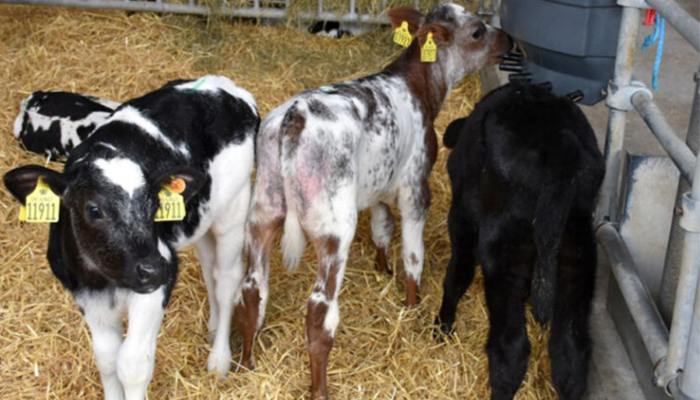
Close to 400,000 calves will move between dairy and beef farms over the next few months. DairyBeef 500 Advisor, Tommy Cox shares insights from the demonstration farms as to how they are sourcing calves that will perform on their systems.
With 15 farmers enrolled in the Teagasc DairyBeef 500 Programme across the country and ~2,000 calves being purchased in the next couple of weeks, the DairyBeef 500 farmers prioritise sourcing a healthy calf, of known genetics from a trusted source to optimise the performance of their systems.
Sourcing healthy calves
The first step in a successful dairy calf to beef system is getting a healthy calf on the ground. Farmers who fail to prioritise health when sourcing run the risk of purchasing unhealthy calves, along with inadvertently introducing diseases and illnesses to other animals already on the farm.
Farmers enrolled in the Teagasc DairyBeef 500 Programme have prioritised purchasing calves from trusted sources. These are farmers with whom they have built relationships and know that the calf arriving on their farms will be a healthy, well reared animal that has received adequate quantities of colostrum and is at an age when disease setbacks are limited. Additionally, in the vast majority of cases, these farms are local, allowing for reduced transport times and minimised stress during transit.
The source farm greatly influences the disease risk on the rearing farm. If buying directly off farm, it is recommended to visit the farm beforehand, assess the herd’s disease status and herd health protocol, along with visually examining the calves prior to purchase. Where larger numbers of calves are required, limit the number of sources, as this will limit the risk of introducing pathogens and diseases to your own herd.
When assessing a calf prior to purchase, the following are a must:
- Alert with a clean, damp nose and bright eyes;
- No lameness and must be able to bear weight on all limbs;
- The navel cord should be dry, withered and shrivelled. Calves with signs of navel infections should be avoided;
- Calves with scour or previous signs of diarrhoea, including hair loss, should be avoided;
- Relaxed breathing – no coughing or panting;
- Any calves with visible of disease should be avoided.
Value for money
Although media reporting is highlighting higher calf prices this spring, securing value for money when purchasing a dairy-beef calf is a must for the farmers enrolled in the programme.
If the DairyBeef 500 farmers give too much for a calf on day one, their prospects of making a return from that animal in 19 or 24 months times are considerably constrained. Where this occurs, it may have a knock-on effect on them returning to the market in the spring of 2026 or 2027 – a backwards step at a time when live exports are under increased scrutiny.
My colleague Alan Dillon, Manager of the DairyBeef 500 Programme, has explored the importance of calf price in an article on Teagasc Daily recently, which is available to read below:
Can anything more be paid for dairy-beef calves this year?
Calf age
Farmers in the DairyBeef 500 Programme value purchasing a calf that is at least three weeks of age. Last year of the ~2,000 calves purchased, the average age of arrival on farm was 24 days. At this stage, calves are generally over the vulnerable stage of scours and other illnesses. This is important for our farmers as many are in off-farm employment and their time is precious, and the added pressures of dealing with young calves, more likely to succumb to disease, is something they are not willing to compromise on.
Beef potential
Historically in calf to beef systems it was difficult to assess the beef production potential of an animal on the day of purchase. Often times, farmers were left disappointed with the performance achieved at finish, be that the age, carcass weight or even the carcass conformation achieved. Now dairy-beef farmers have a useful guide to inform them on the calf’s potential for beef production, carcass performance and even feed efficiency – the Commercial Beef Value (CBV).
This spring, more farmers in the DairyBeef 500 Programme will be using the CBV to help them make more informed purchasing decisions – whether that beef for Holstein Friesian males, or early maturing and continental sired calves. Its use will allow them to buy a quality calf of know genetics that will perform on their farms and won’t disappoint come the point of sale in late 2026 or early 2027.
For more information, Tommy Cox joined Catherine Egan on a recent episode of the Beef Edge podcast, where he discussed calf housing tips to maximise performance.
Listen in below:
More from Teagasc Daily: Practical tips for the calf buyer
More from Teagasc Daily: Accessing CBV – 3 tools every calf buyer needs to be aware of
More from Teagasc Daily: 4 reasons why farmers should use the Commercial Beef Value