
06 September 2023
Research update: Finishing suckler bulls and steers under grazing systems
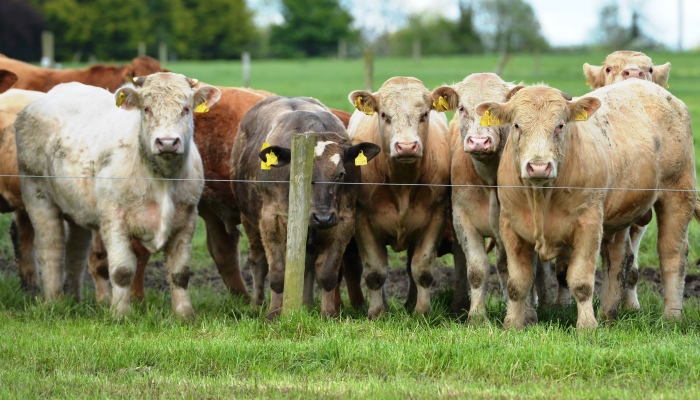
Paul Crosson, Aidan Moloney, Edward O’Riordan and Mark McGee report on the pasture finishing of late-maturing suckler bulls and steers in Ireland.
Finishing male cattle as steers rather than as bulls predominates in Ireland due to the perceived greater suitability of steers for grazing systems and market preferences for steer beef. However, performance metrics such as liveweight gain, carcass weight and feed efficiency are better for bulls when compared to steers.
While this also tends to result in improved economic and greenhouse gas (GHG) emissions performance, bull-beef systems are usually more intensive than steer systems, with higher concentrate feeding levels so the diet formulation and beef-to-concentrate price ratio have a critical bearing on these performance outcomes.
To permit a comparison of bulls and steers on grazing-based systems, a study was carried out at Teagasc Grange using 60 spring-born suckler male weanlings. Cattle were finished at pasture in mid-October (19.5 months of age) as steers or bulls, with half of each gender supplemented with 4kg concentrate for the final three months.
Overall, carcass weight (+44kg), kill-out proportion (+1.4% units) and carcass conformation score (+1.5 units, 15-point scale) were greater for bulls than steers. However, although steers were adequately finished (fat score 2+ or greater) with or without supplementation, bulls were only adequately finished when supplemented. Concentrate supplementation had a similar effect for bulls and steers, increasing carcass weight (+37 kg), kill-out proportion (+1.2% units) and carcass conformation (+1.1 units, 15-point scale) when compared to unsupplemented animals.
The economic and environmental impact of these alternative finishing options for male weanlings when integrated into a suckler calf-to-beef system was evaluated. It was assumed heifers were finished at 20 months of age and the farmed area was 50ha.
At a base R3 beef price of €4.70/kg and a concentrate price of €340/t, net margin was highest for bull-based systems (+32%), although those systems were more sensitive to beef and concentrate prices. Supplementing with concentrates also improved margins for both steer (+26%) and bull-based systems (+8%).
Greenhouse gas emissions/cow units were slightly greater (+2.5%) for production systems finishing males as bulls compared to steers; however, this was reversed when GHG emissions were expressed/kg of carcass produced (-4%). Likewise, where supplementation was provided, GHG emissions were greater (+2.5%)/cow unit but lower/kg of carcass produced (-4%).
This article first appeared in the Teagasc Beef Advisory newsletter for September. Click here to access the full publication.