
24 March 2024
Establishing spring beans and barley
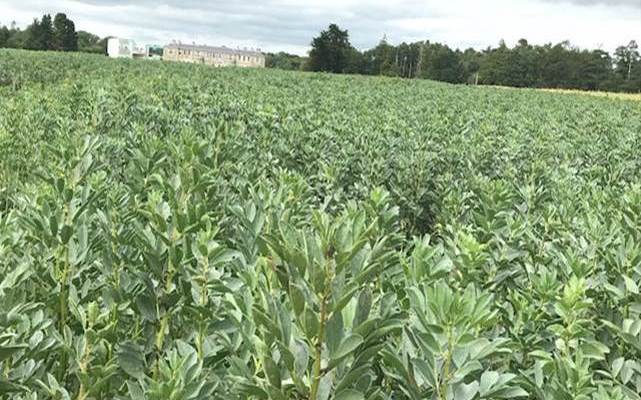
Interest in spring beans is good due to the increased protein payment, favourable contract prices (€250), and a scarcity of spring seed.
The protein payment rate will depend on the area planted but will be in the range of €350-€500/ha. Beans are more profitable than spring barley and also increase profitability across the rotation.
The yield potential of beans is reduced after mid-March sowing. Aim to plant them as early as possible in March but get your seedbed right. Target a plant population of 25-30 plants/m2. Increase this target to 40 plants/m2 for late sowing or on unproductive soils.
A thousand grain weight (TGW) of 550g will need a sowing rate of 206kg/ha (13.1st/ac). Take note of the TGW on the bag as big seed requires high seed rates. It is essential that pre-emergence residual herbicides are used, as Basagran is the only approved post-emergence herbicide which controls emerged broadleaved weeds and it has a very limited weed spectrum. Pre-emergence residual products work best on fine seedbeds with some moisture after spraying. Rolling post sowing helps the activity of pre-emergence herbicides by breaking up the clods. The main pre-emergence herbicide options are: Nirvana 4.0-4.5L/ha; Nirvana 2.5 plus Defy 4.0L/ha; Stallion 3.0L/ha; and Chanon/Emerger 2.5 plus Defy 2.5L/ha.
Spring barley
Seed is in tight supply this season, so growers may not get their variety choice. Gather as much information as possible on the variety you are sowing. Agronomic ratings from other countries do not translate well to Ireland so be cautious, especially with straw strength.
Reduce total nitrogen on varieties where information on straw strength is scarce and avoid fields with recent applications of organic manure. High plant counts significantly increase lodging risk.
Determine the TGW of the seed before planting. Most seed bags (native and imported) will have the TGW printed on the bag, so check before you sow. The target for spring barley is to establish 300 plants/m². If standing ability is a concern, reducing seed rate by 25-30kg/ha can reduce lodging risk.
This article by Ciaran Collins, Teagasc Tillage Specialist, first appeared in the Teagasc Tillage Advisory newsletter for March. Access the entire publication.