
Dairy advice: Spending wisely in 2025
Teagasc Dairy Specialist, Stuart Childs outlines three ways to spend the additional income earned on dairy farms in 2025 wisely, allowing for the insulation of farm businesses for the years ahead.
The Situation and Outlook interim report 2025 published last month by the Agricultural Economics and Farm Surveys Department confirmed the expectation that 2025 will be a bumper financial year. While it won’t surpass the highs of 2022, it is likely to be the second most profitable year in dairy farming. While this creates a threat in the form of high tax bills, it also creates opportunity. With the volatile nature of prices, people need to take advantage of the good years to try to insulate themselves against the bad ones. That requires spending the money earned in 2025 wisely.
Three priority areas that justify expenditure on nearly every farm and will contribute positively to the farm in difficult years – both from a management perspective and a financial perspective – are:
- Soil fertility – this will help to maximise grass growth in more difficult years. With grass the cheapest source of feed, farmers need to create the conditions to maximise the tonnes they grow. Decades of research shows the importance of soil fertility in delivering this, yet we continue to have poor soil fertility on many farms.
- Lime is a cheap fertiliser. As rotation extends and silage is completed, opportunities will come to lime ground and these need to be taken. This will improve the efficiency of uptake of fertiliser applied.
- Phosphorus (P) – while P application is better applied in springtime, it is important to address deficiency if not already done. Index 2 soils need 8 units and Index 1 soils need 16 units along with maintenance requirements. However, P limits exist so caution is advised not to exceed these allowances.
- Potassium (K) or Potash is not regulated in terms of tonnes used or limited by date of application so it can be spread after September 15th. Many farms avoid applying K in the spring due to grass tetany concerns, so autumn is a good time to apply. General advice is 50 units of MOP for Index 1 soils and 25 units for Index 2 along with maintenance requirement. K applications are of particular importance on silage ground as it is important in driving crop performance.
- Grazing infrastructure – growing lots of grass means improved access is required to use it. This investment can range from minor to major. Many farms think they don’t need to invest in this area but cast your mind back to the spring of 2024 and it shouldn’t take you long to come up with areas that require improvements.
-
- More paddock entrances
- Spur roads
- Water infrastructure
- Road surface repair
This topic was the subject of a Grass 10 webinar recently. Click here to look back at the Grass10 webinar on grazing infrastructure.
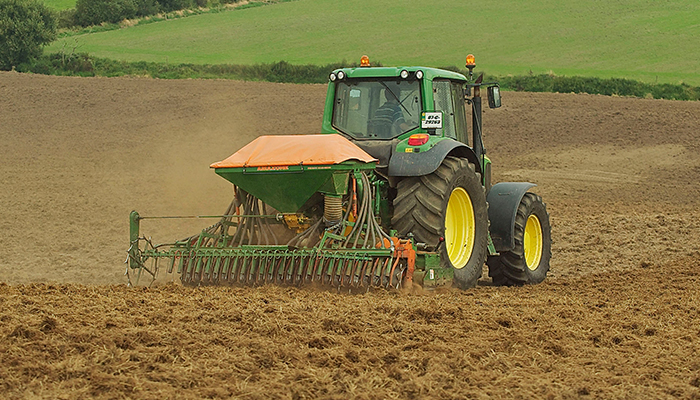
- Reseeding pays for itself, and it drives productivity. Although with just cause, not enough of it has been done in recent years. However, that requires more to be done in years like 2025. Word of caution however, this needs to be done by early September at the very latest to maximise its success.
These are three areas that can facilitate productive expenditure on farms in the autumn of 2025 that will help reduce exposure to tax liability but benefit the farm in the future.
More from Teagasc Daily: Why a good milking routine matters
More from Teagasc Daily: Contract rearing – all you need to know