
26 May 2025
How the Next Generation Herd II is progressing
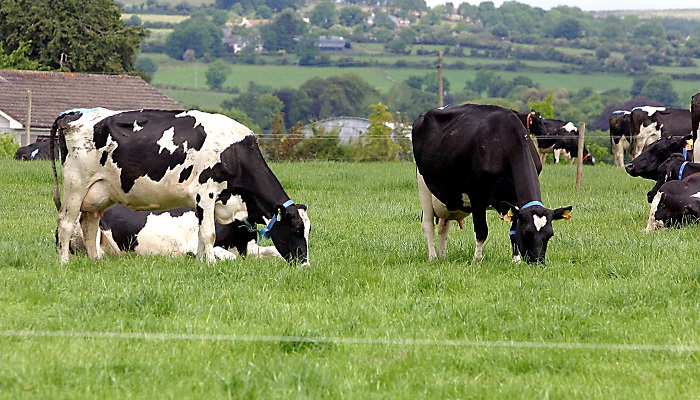
The Next Generation Herd II study is focused on advancing sustainable dairy farming using high genetic merit animals. It explores how genetic merit and stocking rate affect dairy production and beef output. Farm Manager Ricki Fitzgerald shares the latest on the newly established herd’s progress.
The herd was established to explore the potential of the Economic Breeding Index (EBI). The goal is to demonstrate what a dairy herd could look like if farmers consistently used the top EBI-rated bulls over the next decade.
“We’re essentially fast-forwarding 10 years into the future and have selected the highest rated EBI cows to assess their performance in comparison to today’s national average EBI cow,” Ricki Fitzgerald explained.
The herd is structured around three cow genotypes:
- Elite high-EBI Holstein Friesian cows (EBI ~€312)
- Elite crossbred cows (EBI ~€308)
- National average Holstein Friesian cows (EBI ~€217)
These genotypes are then managed under three different stocking rates of 170, 220 and 270kg organic N/ha.
Establishing the herd
The herd was established last autumn, with suitable cows and heifers sourced from within Teagasc herds and with 20 elite Holstein Friesian, 50 elite crossbred and 70 national average in calf heifers and cows (first and second lactation animals) sourced from over 120 farms nationwide. The herd is now made up of 59% first lactation animals 27% second lactation and 14% third lactation.
Given the wide range of source herds, animal health was a major consideration.
“We had a very stringent disease screening protocol,” Ricki Fitzgerald said. “TB was a top priority, and we also tested for IBR, BVD, Neospora, Johne’s Disease, and Q Fever. Every animal passed before entering.”
As an added aid to disease prevention, animals were also quarantined in groups for a month following arrival.
Breeding in full swing
Breeding is well underway, with 93% of the herd already submitted. The use of heat detection collars has supported decisions on insemination timing. To maintain genetic balance across the study, 50% of cows within each cow genotype were selected for sexed dairy artificial insemination (AI) based on key criteria including days calved, body condition score and fertility sub-index. The remaining cows received beef semen, while all replacement heifers were bred using sexed dairy semen to ensure adequate replacements.
To counteract the lower beef merit of some of the cows, attention has been given to the selection of beef sires with strong carcass characteristics. A mix of high and low carcass weight AI bulls, ranging from 1.4 – 15 kg with a DBI of €117 – €130, has been used, evenly distributed across the three cow genotypes. These bulls were also selected for favourable traits such as calving ease. This strategy aims to produce more valuable beef calves without compromising on the calving traits of the dairy herd.
Looking ahead
“This project will give us real insight into how future herds might perform under different scenarios,” Ricki Fitzgerald said, “and it’ll help us make better recommendations to farmers, not just for milk, but for whole-farm sustainability and profitability.”
Find out more about the Next Generation Herd II here.
Moorepark Open Day 2025
More detailed information on the Next Generation Herd II will be discussed at the Moorepark Open Day 2025 on Wednesday, July 2.
Find out more about the Moorepark Open Day 2025 here.