15 March 2024
Growing Wild – Shamrock and Primrose
Catherine Keena, Teagasc Countryside Management Specialist, takes a closer look at some of our native Irish biodiversity.
Shamrock
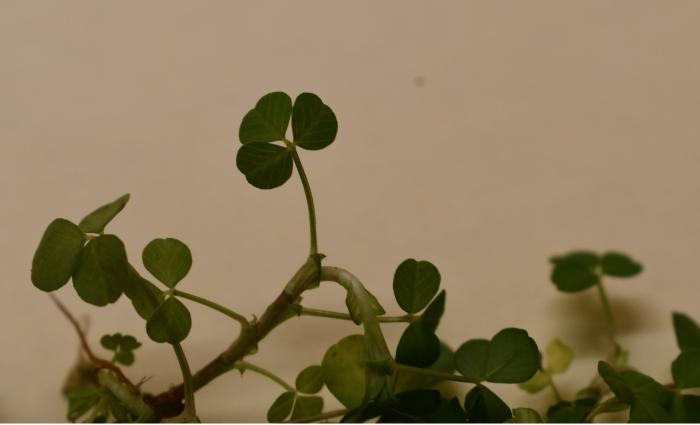
Look out for shamrock, our national emblem. Plants with three usually stalkless leaflets are used. Lesser trefoil also known as yellow clover is grown commercially as shamrock. It has wiry, very slightly hairy stems and the middle leaflet is shortly stalked. It resembles black medick, but lesser trefoil does not have a tooth in the notch at the top of the leaflets. Clusters of up to twenty pale yellow flowers appear in May and after fertilisation droop like tiny bunches of bananas. Other plants that have been used as shamrock are red and white clover, black medick and wood sorrel. As you wear shamrock on St Patrick’s Day, remember it is part of our native Irish biodiversity.
Primrose
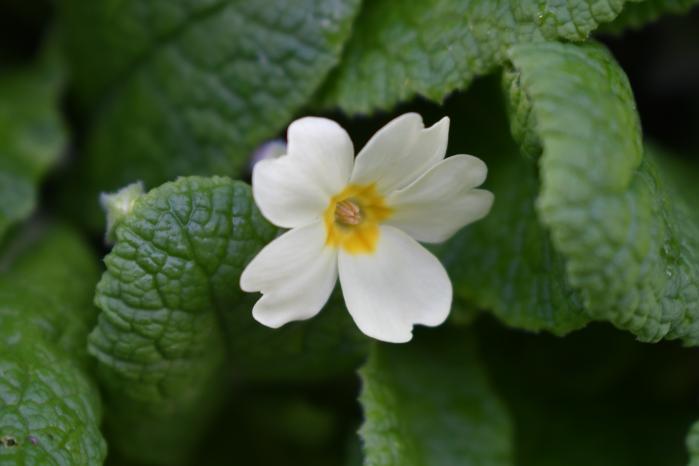
Also growing now, the first primroses, peeping out on south facing banks. Delicate pale yellow petals deep yellow in the centre converge into a long tube. This contains nectar at the base, which is only accessible to long tongued long-tongued species of bumblebes, bee-flies and butterflies. Bee-flies have two wings but otherwise look like bees. A butterfly whose lifecycle is in tune with primroses is the brimstone butterfly. The male has luminous yellow wings while the female is pale green. They emerge from hibernation now having overwintered as adults and feed on primroses on sunny days. Primroses nó sabhaircín are widely recognised and welcomed as one of the signs of spring – part of our native Irish biodiversity.