
29 November 2024
Water quality actions in motion in Limerick
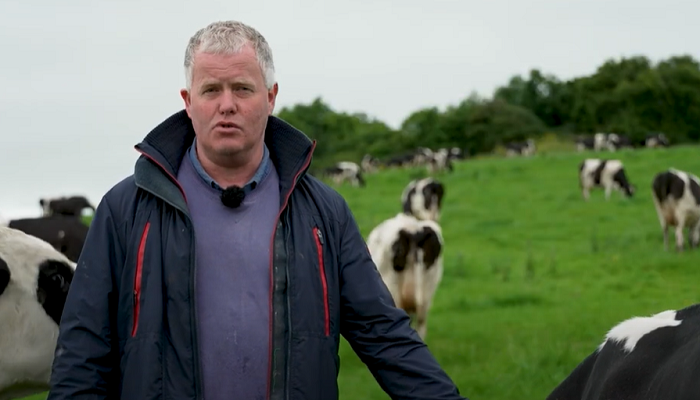
Limerick dairy farmer, Martin Crowe was crowned the winner of the Improving Water Quality category of the Teagasc FBD Environmental Sustainability Awards 2024. Dr Siobhán Kavanagh, Signpost Programme Communications and Engagement Specialist, takes a closer look at the actions being taken on his farm
Identifying the risks
Martin, who farms in Doon, Co. Limerick, has a very good understanding of the status of his local river and the challenges associated with his farm in relation to water quality. He has used the Pollution Impact Potential (PIP) maps to identify the risks to water quality on his farm. These maps, created by the Environmental Protection Agency (EPA), show the highest risk areas for diffuse phosphorus (P) loss to surface water and diffuse nitrogen (N) loss to surface and groundwater.
Mulkear EIP
Additionally, Martin also participated in the Mulkear EIP in recent years, giving him access to support to implement measures on his farm to improve water quality. The Mulkear EIP was a five-year project focused on innovation, technology and knowledge transfer for farmer-led enhancement of water quality, instream habitat and riparian management in the Mulkear Catchment, covering Limerick and Tipperary counties.
The new Farming for Water EIP is a European Innovation Partnership (EIP) which will provide €50 million to some 15,000 farmers up to the end of 2027 to implement a range of measures designed to help improve water quality. Learn more about the new Farming for Water EIP here.
Nitrogen use reductions
Martin has also significantly reduced his chemical nitrogen (N) use. This has been achieved by a combination of better soil fertility, increased incorporation of clover into swards and better use of organic manures.
The nitrogen balance for the farm is now 105kg N/ha, compared to a national average of 147.2kg N/ha (NFS, 2023). The nitrogen balance of a farm is used as an indicator of the potential magnitude of nitrogen surplus which reflects the risk of nutrient losses to water bodies all other things being equal. It is calculated on the basis of N inputs less N outputs on a per hectare basis at the farm gate level. Martin’s N balance is low because of high output in terms of milk sales and low N inputs (including fertiliser, feed, imported forage etc.).
Increased slurry storage
Martin has increased slurry storage on the farm in recent years. This additional storage gives him the flexibility to use slurry on the farm when he is going to get the greatest benefit from it. Slurry is a valuable nutrient source on this farm and applying it to a growing crop is key to getting the most from it.
Having additional storage means Martin doesn’t have to go out with slurry in mid-January, when legally permitted to do so, instead he can wait until temperatures are right and conditions allow to maximise the value of the slurry. Martin has also invested in LESS equipment to give him the flexibility to use slurry when he needs it.
Additional improvements
A bunded drain was created alongside the farmyard, capturing runoff from the yard. Martin has also created a wetland pond on the farm. This pond is a biodiversity feature, but can also act as a sediment trap. It also has wellbeing benefits for Martin and the family.
More insights from Martin Crowe’s farming system are available in the below video:
Also read: Balancing sheep, beef and tillage – Brian Nicholson’s route to partial organic conversion
Also read: Championing environmental sustainability – what set the Walsh family apart
Also read: How this suckler farmer is going the extra mile to protect water quality
Also read: Award winning Meath dairy-beef farmer prioritises farm-to-farm sourcing
Also read: Edwin Thompson’s steps to reducing greenhouse gas emissions