
21 November 2023
Finishing store lambs this winter
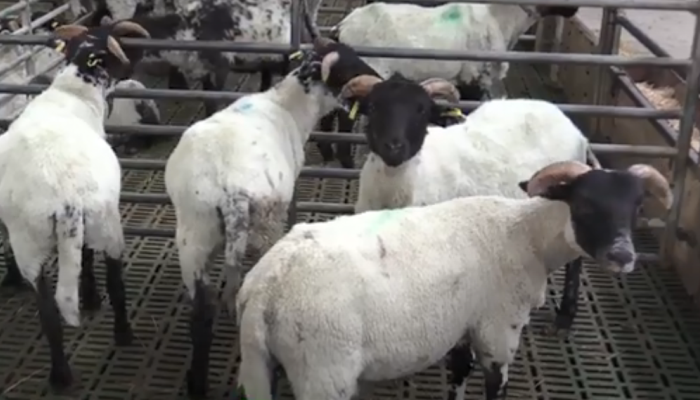
Finishing store lambs in the winter months has numerous benefits and challenges, but there is a potential margin in finishing lambs currently, Frank Campion and Mark Dolan tell us more.
A key component of any lamb finishing system is to have a proper budget done. This should include a proper assessment of current lamb weights, the type of feed available and the expected performance of the lambs from the system used.
Lamb finishing at this time of year is usually based on either ad-lib concentrate feeding or grazing lambs on forage crops, such as forage rape or catch crop mixes.
Finishing lambs on ad-lib concentrates will achieve the best lamb performance. However, in order for it to be economical, lambs should be around 36-38kg live weight when going on to ad-lib concentrates. Lighter lambs should be grazed outdoors on forage crops or at grass with concentration (500g/head/day) until suitable.
Lighter type lambs will finish satisfactorily off ad-lib concentrates, but will require extra time and feed which needs to be budgeted for. Where lambs are on ad-lib concentrates, it is important that husbandry is good and the following guidelines are followed:
- Gradually build lambs up to ad-lib feeding levels. Increase the amount offered by 200g/day every three days until lambs are ad-lib feeding;
- Ensure diet is properly formulated. If finishing male lambs, include ammonium chloride to prevent urinary calculi. Inclusion rate is 0.5% or 5kg per tonne;
- Ensure that the sheep house is well ventilated and adequately bedded with straw in bedded sheds.
Performance will vary by breed and sex, but on average lambs will be growing in excess of 200g/head/day or putting on 1.5-1.8kg live weight per week. Regular weighing is important to ensure lambs are drafted at the correct weight and assessed for muscle and fat cover prior to being drafted for slaughter.
Forage crops
Lambs grazing on forage crops, such as forage rape and hybrid brassica, won’t perform as well as lambs housed indoors on ad-lib concentrates. These lambs, however, can perform satisfactorily and finish off these crops where properly managed.
Recent studies in Athenry and on the BETTER Sheep Farm Programme have shown that hill cross lambs will grow at approximately 150g/head/day once adapted onto the crop and kill out around 44-45% depending on breed and sex of the lamb.
Grazing forage crops in the winter for lamb finishing requires careful management and lambs need to be weighed regularly once approaching target weights. Fields need to be divided in blocks to allow lambs access to fresh forage every 2-4 days. Care should be taken to ensure lambs are not forced to overgraze the stalks of the crops, as this will reduce animal performance.
Also check the correct guidelines for grazing these crops in terms of lie back space and buffer margins for compliance purposes. Where lambs are grazing forage brassica crops the following guidelines are essential to maximise performance:
- Introduce lambs slowly to brassica crops to avoid digestive upsets. Lambs will take 3-4 weeks for gut fill changes to take place fully;
- Measure crop yield and allocate grazing area accordingly, average utilisation will be approx. 60% but will vary with weather and pre-grazing yield;
- Weigh and assess muscle and fat score regularly once lambs are approaching target weights;
- If running short on forage, consider feeding concentrates with the crop to boost performance.
The Teagasc Store Lamb Calculator is available here, which is a very useful tool for budgeting for lamb finishing.