
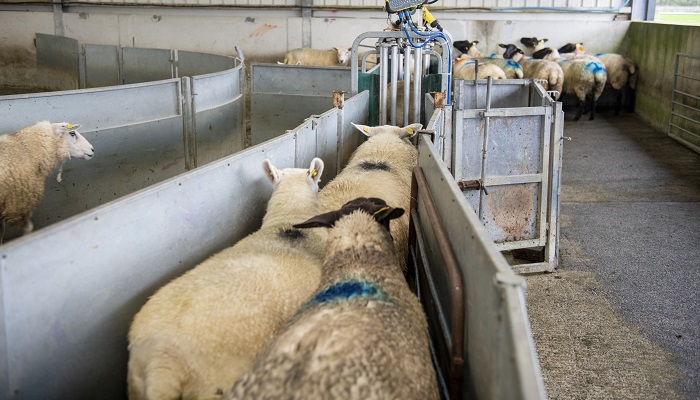
The optimum time to wean lambs is at 14 weeks or 100 days of age, writes Patricia Lynch, Drystock Advisor, Teagasc Ballinrobe, who shares key tips on maximising lamb performance in the post-weaning period.
Leaving lambs on the ewes longer than 100 days can have a negative impact on both. For the ewe, the pressure of feeding will place undue stress at a time when they need to start putting down body condition for the approaching mating season. For the lambs, they will be competing with the ewes for the best quality grass. Heavy lambs fit for slaughter should be drafted pre-weaning.
Post weaning management
Once weaned, lambs should be divided into groups based on their liveweight. It is a good idea to weigh a proportion of your lambs to see how they compare. If lambs are significantly below target, the possible reason for this should be investigated. Potential reasons are poor grassland management, poor ewe condition at or post lambing, disease or parasites, or poor genetics.
The heaviest group will be the finishing group, and these should have access to the best quality grass and possibly receive supplement feeding if necessary. Avoid feeding large quantities of concentrates to light lambs, as this will mean that lambs are consuming lots of meal, which results in high costs.
For farms that are in a tight position for grass, weaning lambs off ewes will provide a good opportunity to take the pressure off – especially as the trade for ewes at marts remains strong for all weight categories if it’s a case that stock needs to be moved on.
Table 1: Suggested weaning dates based on lambing date
| Lambing commences | Mean lambing | 14 weeks / weaning |
| March 1 | March 10 | June 17 |
| March 15 | March 25 | July 2 |
| March 30 | April 10 | July 17 |
| April 15 | April 25 | July 22 |
Ewe management after weaning
Ewes need time to recuperate after weaning. Forcing ewes to lose weight after weaning is not a good idea. Restricting ewes for a week after weaning to help with drying off and avoiding any mastitis issues is a good idea. After that, ewes should be divided based on body condition, with thin ewes getting priority access to grass and heavier ewes being used to graze out paddocks.
Michael Gottstein, Head of Sheep Knowledge Transfer at Teagasc, featured on the Teagasc OviCast podcast last year, where he detailed the weaning process and offered some useful tips on managing ewes and lambs post weaning.
Listen in below:
Quality grass required to finish lambs
Lamb performance and cheap live weight gain will be maximised where lambs have access to quality leafy grass post-weaning. Sward heights between 6cm and 8cm are best suited for these lambs post weaning. Once lambs are moved out of a paddock, it is essential that they are grazed out fully to maintain grass quality into August/September. Dry ewes are ideal to clean out these swards. If there is no stock on the farm that can do this job, then the sward will need to be mowed/topped to 4-5cm.
For more tips and advice on weaning, read this month’s Teagasc Sheep Advisory newsletter here.