
Building specifications and planning
The DAFM page referenced at the link above provides information relating to planning and exempted rural developments. While this document is a useful guide to the parameters which must be met to qualify for exemptions from planning it is advisable to apply for any exemptions from the local planning office. These are private applications to local authority without need to put up signage at the property and should have a quicker turn around time than a full planning application.
S.I. No. 649 of 2025 Planning and Development (Exempted Development Act of 2000) (No 2) Regulations 2025 brings changes to the guidelines referenced above.
Key changes are in the new legislation include:
Class 6 the gross floor area for a new structure for the provision of housing horses having a gross floor space not exceeding 300 square metres (replacing the previous 200 square metres) (whether or not by extension of an existing structure), and any ancillary provision for effluent storage.
Class 6 cont’d – the gross floor space of such structure together with any other such structures situated within the same farmyard complex or within 100 metres of that complex shall not exceed 450 square metres (replacing the previous 300 square metres) gross floor space in aggregate (i.e. new and existing Class 6 structures within 100 metres of each other not to exceed 450 metres square).
Class 6 (and 6A) new conditions – no structure shall be constructed within a flood zone identified in statutory land use plans as Flood Zone A or B or where probability of flooding is moderate to high or erosion control zone. Structure shall not be within 60 metres of a public or private water source. Structure shall not be less than 50m from a water course or water body in the case of new farmyards, and not less than 10m in the case of extensions / modifications to an existing facility.
These changes shall be read along with the other previous points in the above linked document.
There is also a new Class 6A relating to the provision of structure for the storage of slurry, effluent or soiled water collected from agricultural buildings, farmyards, and any ancillary provision to aid in the handling of the slurry, effluent, The maximum storage capacity shall not exceed 1,00 cubic metres. The aggregate capacity of tanks situated within the same farmyard complex, shall not exceed 1,500 cubic metres under the exemption guide. Read the further stipulations re this exemption at the SI No 649 link above.
The use of Class 6 and 6A requires a declaration from the relevant Planning authority under section 5 of the Principal Act, declaring the exemption is applicable prior to commencement of construction.
____________________________________
There are restrictions on exemptions (Article 9 of Planning and Development Regulations, 2001 as amended). development to which article 6 relates shall not be exempted development for the purpose of the Act if such development would
- contravene a condition attached to a permission under the Act or be inconsistent with any use specified in a permission under the Act
- consist of or compromise the formation, laying out or material widening of a means of access to a public road the surfaced carriageway of which exceed 4 metres in width
- endanger public safety by reason of traffic hazard or obstruction of road users
- works under a public road (e.g. underpass)
- interfere with the character of a landscape, or a view or prospect of special amenity value or special interest
- consist of or compromise the excavation, alteration or demolition (other than peat extraction) of places, caves, sites, features or other objects of archaeological, geological, historical, scientific or ecological interest
- consist of or compromise extension, alteration, repair or renewal of an unauthorised structure or a structure the use of which is an unauthorised use
- consist of demolition or such alteration of a building or other structure as would preclude or restrict the continuance of an existing use of a building or other structure where it is an objective of the planning authority to ensure that the building or other structure would remain available for such use
- consist of the fencing or enclosure of any land habitually open to or used by the public during the 10 years preceding
- obstruct any public right of way
- further to the provisions of section 82 of the Act, consist of or compromise the carrying out of works to the exterior of a structure, where the structure concerned is located within an architectural conservation area.
- be in an area to which a special amenity order relates
- need an environmental impact assessment
- have significant repercussions on major accident hazards
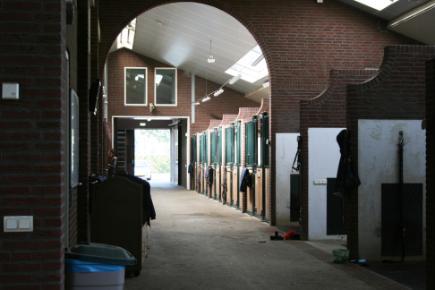
Further specifications on the above linked page provide a useful guide for those embarking on building of horse facilities including stabling; all weather exercise areas; handling stocks; horse walkers.
Key specifications to reference include S101, S102, S104, S108, S129, S148, S148A, and S156. S156 might be the most relevant specification for many to read as a starting point.