
10 January 2024
10 tips for trouble-free calving
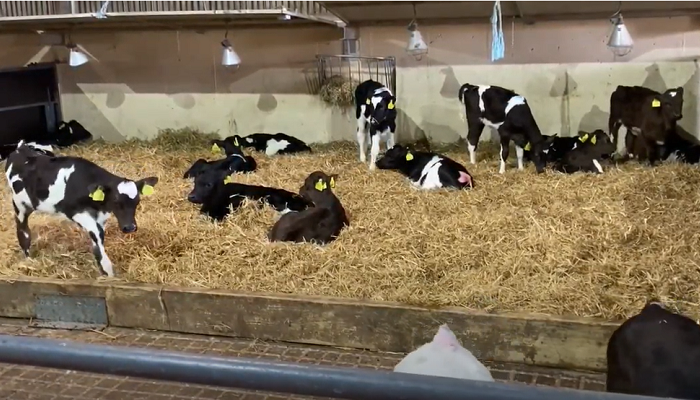
For most herds, peak calving season is just around the corner and about 50% of dairy cows will calve between now and the end of February, write Joe Patton, Head of Dairy Knowledge Transfer at Teagasc.
That brings great advantages later in the season in terms of days in milk, grass in the diet, getting cows ready for breeding, and young stock management. However, it still means a big labour challenge at peak time. Based on the experiences of some top-performing farms with compact calving and low calf mortality rates, here are 10 useful tips:
- Take an hour or two to build a plan for spring with all people working on the farm, including family members and employees. What went well or badly last year? What can be done to fix any issues? Set the main priority tasks for each person. Build a roster for calving cover.
- Train heifers to enter the parlour in January. Mixing a few quieter older cows with the group for a few days before can help, as heifers will follow these into the parlour
- Divide and group cows by calving date groups if housing design allows. This will make sorting and drafting much simpler when calving commences.
- Ensure cows are getting enough minerals, are eating low potassium (K) forage, and are at body condition score (BCS) 3.0 to 3.25 at calving. Restrict feed to late-calving cows that are at risk of over-conditioning. These steps will all help reduce milk fever and other metabolic disorders.
- Clip tails and freeze brands in good time before calving to help with ID and hygiene.
- Plan to run a colostrum group during calving season. Cows will remain in this recovery group after calving until they are ready for the bulk tank. Set up an accommodation area for this group. Milk the colostrum group last to simplify milking. Have a CMT kit in place and quarter-test all cows before they begin milking in to the bulk tank.
- Do your sums on calf accommodation space. A compact calving herd (75% plus in six weeks) will likely have 85-90% of total calves on hand at a given time in March. This means that calf housing of 1.5m2 per cow in the herd is needed. For example, a 100-cow herd needs 150m2 space minimum. This figure will be close to 180m2 per 100 cows if calves are sold at an older age.
- Have all calf accommodation set up in advance, with bedding, pen divisions, troughs, water and racks all in place and ready to go. Plan for extra temporary space if short – do not overcrowd calf sheds.
- Have a system in place to easily move milk around the yard e.g. milk cart trailer etc.
- Have all consumables and calving equipment in place and to ready for use. Buy a refractometer for colostrum testing.
For more information on calf rearing, access the Teagasc Calf Rearing Manual here.