
19 April 2025
Delivering higher CBV calves from a crossbred herd
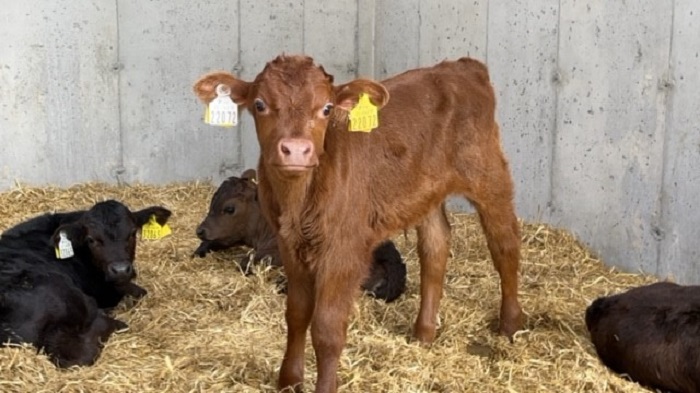
DairyBeef 500 Advisor, Tommy Cox writes on the breeding programme implemented on the farm of David and Robert Gannon, where high beef merit sires are delivering calves with a higher Commercial Beef Value (CBV).
As part of last year’s beef breeding series, we took a visit to David Gannon and Robert Gannon in Kilconieron, Co. Galway to assist in beef bull section for their dairy herd.
The farm consists of 170 predominately crossbred type cows on a 55ha grazing platform. Given the cow type and the fact the herd sits at the lower end of national average in terms of the beef merit, a team of high DBI sires – and more importantly a team of high beef sub index bulls within the Dairy Beef Index – were used in a bid to produce higher beef merit calves.
A split breeding approach
The fact the farm uses close to 100% AI gave great flexibility to select a range of sires.
It was decided to split the beef bull teams into three periods over the breeding season: 1). a team of bulls for the first four weeks; 2). a team of bulls for the main calving period; and 3). a team of shorter gestation bulls for the latter end of the breeding season.
Some of the bulls featured in more than one team. In total, five different Angus bulls, two separate Belgian blue bulls and one Limousin bull (LM2014) were used, along with two Angus stock bulls to mop up the heifers.
The team of bulls selected had a calving difficulty ranging from 2.6% to 5.6%, which allowed David to pick suitable bulls to match the cow depending on her age and size. Longer gestation bulls were used in the first three weeks of the breeding season, and shorter gestation bulls toward the end to keep calving tight.
The criteria that the bull needed to get on the team for the cows was: a calving difficulty of less than 6%; gestation length of less than 3 days; a beef sub index of no less than €100; and a carcass weight of greater than 12kg.
Performance
We re-visited David to see how calving went, what the demand for calves was like and what changes he is going to make when selecting bulls for the year ahead.
Overall, David was happy with the bulls selected for the farm, with no major issues with difficult calvings been reported.
Angus calves, in general, hit the ground with no degree of difficulty and the demand for them was high. One bull David found to have increased gestation was AA4638, which did lead to slightly bigger calves requiring slight assistance in some cases but, on the other hand, some of the calves on the ground after this bull were exceptional, he felt.
In terms of calving difficulty and gestation length, David was extremely pleased with the Belgian Blue and Limousin bulls used. One comment he did make was he felt there was a bigger demand for the Belgian Blue calves in comparison to their Limousin comrades, which were of equally good quality.
The only real problem encountered at calving was with one of the stock bulls used on the heifers. This bull did produce some big calves, which did result in a degree of difficulty in some cases. This year, the plan is to use 100% AI. For heifers destined for beef breeding, only highly reliable sires will be used.
By being more selective when choosing their beef bulls, the average CBV of this year’s calf crop is expected to be close to four-star on average, which is a very high average, but David feels the quality of the calves on the ground are superior to previous years.
Tommy Cox is an Advisor on the Teagasc DairyBeef 500 Campaign. The above article was adapted for use on Teagasc Daily from an article first published as part of the DairyBeef 500’s Dairy Beef Index Series on Agriland.
Find out more about the Teagasc DairyBeef 500 Campaign here.