
13 June 2025
Controlling the conifer harvest: Timber security
This is the first in a series of articles on controlling the conifer timber harvest and sales process, where Teagasc forestry advisors provide guidance related to timber security.
Harvested timber is a valuable commodity and, as such, should be protected. Timber security is an important factor to consider when selling timber stacked at the forest roadside and waiting for collection after harvesting.
Forest owners should secure harvested timber before it is transported to its market destination(s). It is also important to ensure prompt removal of timber from the forest as agreed within the timber sales contract. This will also minimise the risk of drying of timber, which is particularly important where timber is sold on a weight basis.
There are a number of precautions an owner can take to reduce the risk of theft. Care must be taken to ensure that the timber removal process to sawmills and other processors is carried out in an efficient and orderly fashion and to make sure that all loads are accounted for. In an ideal scenario, if the owner lives nearby the forest, she/he would meet the haulier at the forest entrance to open the gate and be on site when the timber is being collected. In many cases however, this is not possible, and a range of alternative safeguards can be put in place.
Operate a forest docket system
It is important to have records of all timber lorries accessing the forest and of the type and weight of timber assortments collected. The forest docket system is a simple protocol to track the access of lorries to a forest harvesting site, to ensure timber security and to inform the owner on the amount and total value of the timber being harvested. The ITGA Model Timber Sales Dispatch System provides a widely accepted template for managing timber sales in private forests.
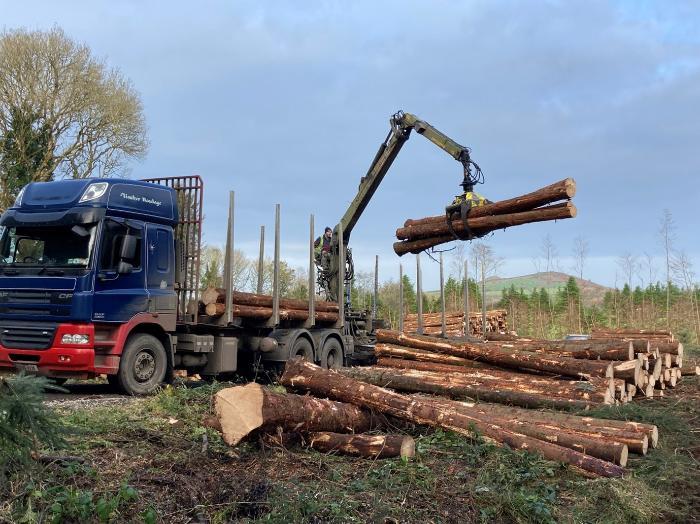
Loading of logs prior to transport from the forest
Install a gate or barrier at the entrance to the forest to regulate access
Having a secure gate is a necessary and a critical element in controlling access to a harvesting site. Without a secure access gate, it would be difficult to ensure timber security. Keys for the lock at the gate (or combination in case of a combination lock) should be shared only with the contracted haulier therefore reducing the risk of unauthorised entry. This can be combined with a text messaging notification protocol for added control.
Erect temporary cameras
Motion-activated security cameras can be used to monitor the traffic of lorries entering the harvest site. These cameras can be relatively inexpensive and easy to use. If in place, it is important that cameras are used in accordance with data protection legislation.
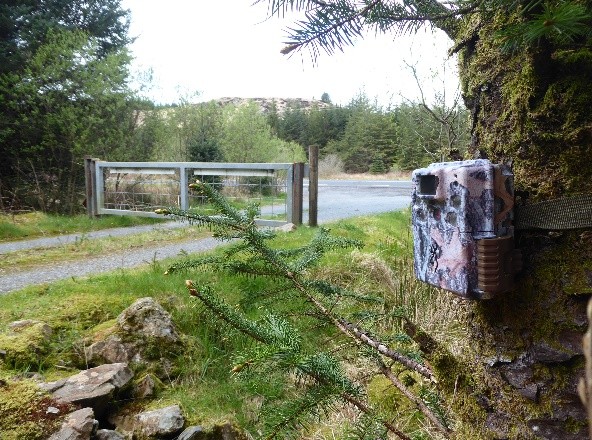
Camera at the forest gate
Take regular photos of stacks to monitor roadside stocks
Taking regular photos of timber stacks can be a simple but effective way to track the movement of harvested timber and a way to monitor the roadside timber stocks.
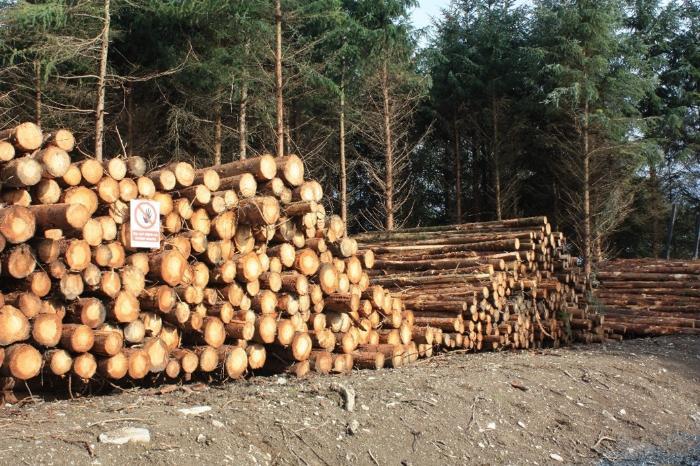
Log stacks
Assign an individual to supervise harvesting/delivery to market
Supervision throughout the harvesting process is very important to ensure general best practice and that health and safety standards are met. In relation to timber security, having supervision in place by an individual with forestry expertise can help ensure that all the safeguards necessary to safely and securely sell timber to a buyer are in place and fully functioning. Registered foresters are forestry professionals registered with the Department of Agriculture Food and the Marine and available to forest owners to assist with harvesting supervision and timber security.
Teagasc provide independent and objective advice on all forestry issues. For further information, contact your local Teagasc forestry staff and visit the forestry section of the Teagasc website.