
17 May 2022
Identifying poor performing sheep in your flock
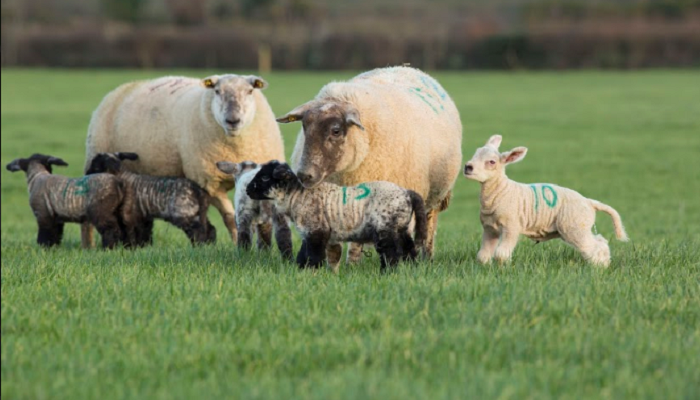
Every year ewes drop out of flocks for a variety reasons including mastitis, prolapse etc. However, invariably some ewes slip through the cracks and despite underperforming are kept on for a further year. Here Teagasc researcher Frank Campion has some advice on identifying underperforming ewes.
Most flocks will pick out cull ewes at weaning time and again in the lead up to mating time when unfortunately some of the problems encountered earlier in the year have been forgotten and that ewe we were sure we would remember isn’t so recognisable anymore!
Cull tag
One easy solution to this issue is a simple ‘cull’ tag (non-NSIS management tag) which is a simple and cheap way around this problem. Putting one of the cull tags in the ewe’s ear when she is identified as being a problem ewe or a poor performing ewe means when it comes to selecting culls for sale the ewe is easily identifiable. For an established flock (i.e. not one in an expansion mode) the cull rate every year should be between 20-25%. Keeping to this level means the age profile of the flock remains steady and where breeding your own replacements allows for genetic gain to increase yearly.
What to watch out for
Selecting the obvious ewes that have had problems that will prevent them from rearing lambs again next year will account for a lot of this 20-25% but there is usually room to select out some ewes on some forgotten factors. A prime example of this would be ewes that left the lambing shed with no lambs or else went to grass with lambs but for one reason or another didn’t manage to rear any lambs once outside. These ewes can often stay on in the flock for the summer and by the time we come to selecting ewes for mating the following year are kept as they are usually in good BCS after not rearing any lambs. This is a problem that can be avoided by correctly marking them once identified as being a poor performing ewe. Ideally ewes that are empty at pregnancy scanning time, don’t lamb or lamb but don’t go out to grass with lambs should be sold as soon as possible. This will reduce demand for grass on the farm and they will also generate some cash flow at times of the year when there is limited other off farm sales.
Poor milk production
Another element of performance that can be identified at this time of year are ewes that are rearing lambs but for no obvious reason are not doing a satisfactory job. From birth to approximately 7 weeks of age the lamb is relying on the ewe’s milk production as its main nutritional source. Lambs that fail to perform and are small and behind target at this stage can give a good indication of poor milk production by the ewe. Unless you have an EID recording system and are weighing lambs at birth it can be difficult to identify these ewes as the year progresses. However, at this time of the year it is still possible to identify these ewes and their lambs and the ewes can be marked for culling after weaning.
Flock management April – May
Management of the flock from April/May has the potential to effect the flock for the rest of the year. While some elements of flock management are outside of our immediate control we can control some of the most important factors including:
- diet (grassland management) and
- health (worm control).
As presented in Table 1. The ‘poor management’ flock A is performing significantly poorer than flock B – good management, showing the importance of management at this time of year. However, within each of the flocks there is a variation in the ADG, demonstrating that within every flock there will be ewes that are poor performing in comparison to the rest of the flock and can be culled from the flock.
Table 1. Comparison of lamb performance from birth to weaning for two mid-season lambing flock operating the same system under different management programmes.
| Flock A – Poor management post lambing | Flock B – Good management post lambing | |
|---|---|---|
| Twin lamb mean ADG 0-7 (g/day) | 270 | 298 |
| Min ADG 0-7 (g/day) | 76 | 174 |
| Max ADG 0-7 (g/day) | 487 | 395 |
Find out more from Teagasc about Sheep here.
Read about the upcoming Teagasc Athenry sheep open day on 18th June here
The Teagasc Sheep Specialists and Researchers issue an article on a topic of interest to sheep farmers on Tuesdays here on Teagasc Daily. Find more on Teagasc Sheep here. For any further information or assistance contact your local Teagasc Office here: Advisory Regions.