
07 April 2024
Growing Wild – Tutsan and Woodrushes

Catherine Keena, Teagasc Countryside Management Specialist, takes a closer look at some of our native Irish biodiversity.
Tutsan
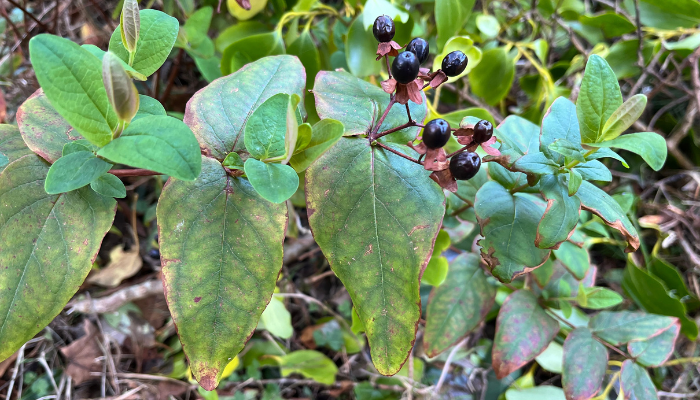
Look out for tutsan with its last remaining black berry-like capsules, which have transformed from their bright red colour last autumn. This low growing woody species can be up to a metre high with woody stems at the base. It is a semi-evergreen with broad oval hairless leaves with tiny translucent dots. Found in deciduous woodlands and hedges in slightly damp areas, only a few individual plants grow in an area – never dominating. Often found with other less common species – it indicates a valuable hedge margin, which has not been sprayed or cultivated. Tutsan is the native member of St. John’s-wort family and is part of our native Irish biodiversity.
Woodrushes
Look out for woodrushes. These are grass-like plants with simple flowers. The leaves are like blades of grass with soft white hairs. Clumps arranged like a bouquet, growing often become the dominant vegetation. The scientific name for woodrush is Luzula and there are a number of species, which grow in different habitats including woodland, heaths and grassland. Field woodrush flowers early from March and is known as Good Friday grass. They are a positive grassland indicator when scoring fields for ACRES. Others species are heath woodrush, great woodrush and hairy woodrush, which flower from a little later – all part of our native Irish biodiversity.
Previous Growing Wild articles
- Growing Wild – Shamrock and Primrose
- Growing Wild – Blackthorn flowers and whitethorn leaves
- Growing Wild – haws and spindle fruit
- Growing Wild – Crab Apples and Elderberries
- Growing Wild – Ivy flowers and Common knapweed
- Growing Wild – Meadowsweet, Ox-eye Daisy and Selfheal
- Growing Wild – Marsh marigold and Ribwort plantain
- Growing Wild – Dandelions and cowslips
- Growing Wild – Lesser Celandine and Ivy berries
- Growing Wild – Winter Heliotrope and frogspawn
- Growing Wild – Willow Catkins and Birds Nests
- Growing Wild – Harts Tongue and Hazel
- Growing Wild – Holly Berries and Scot’s Pine
- Growing Wild – Whins and Ferns
- Growing Wild – Rose Hips and Flowering Ivy
- Growing Wild – Yarrow and Herb Robert
- Growing Wild – Elderberries and Blackberries
- Growing Wild – Haws and Spindle
- Growing wild – Guelder Rose and Sloes
- Growing wild – Purple loosestrife and Lord and Ladies
- Growing Wild – willowherb and water mint
- Growing Wild – dandelion and greater stitchwort
- Growing Wild – willow, primrose and lady’s smock
- Growing Wild – whitethorn and cow parsley
- Growing Wild – bluebells and guelder rose
- Growing wild – Honeysuckle and Foxglove
- Growing Wild – Elder and Ragged Robin
- Growing wild – dog rose and meadowsweet
- Growing wild – Privet and Lady’s Bedstraw
- Growing Wild – Bird’s foot trefoil and Knapweed